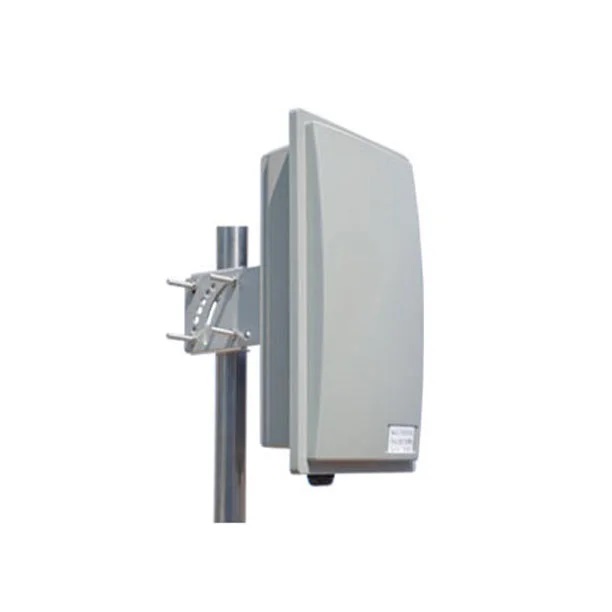
Understanding 2x2, 4x4, 8x8 MIMO for 5G Systems, FWA and Industrial Networks
As a professional MIMO Antenna Manufacturer, Asian Creation Communication provides engineered antenna solutions for modern 5G communication systems, including FWA (Fixed Wireless Access), CPE routers, base stations, and private networks.
This guide explains how 5G MIMO antennas work, how different configurations affect performance, and how to choose the right solution for your application.
What is a 5G MIMO Antenna?
A 5G MIMO antenna (Multiple Input Multiple Output) is an antenna system that uses multiple transmitting and receiving elements to improve data throughput, signal reliability, and spectral efficiency.
Unlike single-antenna systems (SISO), 5G MIMO antennas allow multiple data streams to be transmitted simultaneously over the same frequency band.
In practical 5G deployments, MIMO antennas are a core technology for achieving high-speed wireless communication in both urban and remote environments.
Why MIMO is Critical in 5G Networks
5G networks are designed for higher capacity, lower latency, and more connected devices. 5G MIMO antennas enable this by:
Increasing data throughput without additional spectrum
Improving signal stability in complex environments
Reducing interference through spatial diversity
Supporting beamforming for targeted signal delivery
In short, 5G MIMO antenna systems are essential for unlocking full 5G performance.
How 5G MIMO Antennas Work
A 5G MIMO antenna system uses multiple antenna elements to process signals independently.
Key technologies include:
Spatial multiplexing – multiple data streams transmitted simultaneously
Diversity gain – improved reliability in weak signal environments
Beamforming – focused signal direction toward the receiver
These techniques allow 5G MIMO antennas to maintain stable communication even in high-interference or long-distance scenarios.
Types of 5G MIMO Antennas
Different 5G MIMO antenna designs are used depending on transmission distance, frequency band, and deployment architecture.
Based on practical deployment requirements, our 5G MIMO antenna solutions are primarily focused on high-gain directional systems:
High-Gain MIMO Dish Antennas (Primary Solution)
5G MIMO Dish Antennas are designed for long-range, point-to-point communication and backhaul applications.
Key features:
Dual polarization (2x2 MIMO) design
Ultra-high gain ranging from 15dBi to 36dBi
Narrow beamwidth for precise signal alignment
Long-distance transmission capability
Typical frequency ranges supported:
1.7–2.7 GHz (LTE / 4G bands)
3.3–3.8 GHz (CBRS / n77 / n78)
4.9–6.5 GHz (5G / WiFi backhaul / unlicensed bands)
Typical applications:
5G backhaul dish antenna for point-to-point links
MIMO dish antenna for FWA (Fixed Wireless Access)
WISP long-distance wireless network deployment
Private 5G industrial network connectivity
Wideband MIMO Dish Antennas
For multi-network compatibility, wideband 5G MIMO dish antennas support extended frequency ranges:
Best suited for:
Compact MIMO Dish Antennas
Compact form-factor designs provide flexibility in installation:
Applications:
Applications of 5G MIMO Antennas
Based on actual deployment scenarios, 5G MIMO dish antennas are widely used in:
5G Backhaul & Point-to-Point Links
High-capacity wireless backhaul
Fiber replacement in difficult terrain
Stable long-distance transmission
Fixed Wireless Access (FWA)
WISP (Wireless ISP) Networks
Long-distance network expansion
Backbone link construction
Multi-node directional communication
Private 5G Industrial Networks
Mining, oil & gas, remote sites
Smart factory communication
Industrial IoT backbone
CCTV & Surveillance Transmission
How to Choose the Right 5G MIMO Antenna
When selecting a 5G MIMO dish antenna, key engineering parameters include:
1. Frequency Band Selection
Choose based on network deployment:
1.7–2.7 GHz → LTE / 4G networks
3.3–3.8 GHz → 5G NR (n77 / n78 / CBRS)
4.9–6.5 GHz → high-frequency backhaul / unlicensed
2. Gain Requirement (Critical for Distance)
15–22 dBi → short to mid-range links
24–30 dBi → long-distance communication
30–36 dBi → ultra long-range backhaul
3. Antenna Size vs Performance
430–600mm → easier deployment, medium gain
600–900mm → balanced performance
900–1200mm → maximum gain, long distance
4. Polarization (MIMO Capability)
All MIMO dish antennas use:
5. Deployment Environment
Wind load considerations (perforated design options)
Alignment precision requirement
Mounting structure (tower / pole / rooftop)
Typical 5G MIMO Dish Antenna Configurations
We offer a wide range of 5G MIMO dish antennas covering different deployment needs:
Long-Range High Gain Solutions
Mid-Range Balanced Performance
CBRS / 5G Band Solutions
Wideband LTE + 5G Solutions
High-Frequency Backhaul Solutions
OEM & Custom 5G MIMO Antenna Solutions
As an experienced 5G MIMO Antenna Manufacturer, we provide full OEM and customization support:
Custom antenna structure design (panel, omni, terminal)
Frequency tuning for global 5G bands
MIMO port configuration optimization
Integration with routers, CPE, and industrial devices
Rapid prototyping and mass production support
We work closely with system integrators and device manufacturers to ensure optimal RF performance.
Why 5G MIMO Antennas Matter in Real Deployments
In real-world 5G networks, performance is not determined by the modem alone.
The 5G MIMO antenna system directly affects:
Signal stability
Data throughput
Coverage distance
Network reliability
A properly designed MIMO antenna system can significantly improve overall 5G performance, especially in FWA and industrial environments.
FAQ – 5G MIMO Antennas
What is 4x4 MIMO in 5G?
It refers to four transmitting and four receiving antenna paths, improving throughput and link stability.
Is MIMO necessary for 5G routers?
Yes. Most 5G routers rely on MIMO to achieve high-speed data performance.
What is the difference between MIMO and SISO?
MIMO uses multiple antennas for multiple data streams, while SISO uses only one.
Which MIMO antenna is best for FWA?
4x4 MIMO is commonly used for 5G FWA due to its balance of performance and cost.
Request a 5G MIMO Antenna Solution
Looking for a reliable 5G MIMO Antenna Manufacturer for your project?
Share your system requirements, frequency band, and deployment environment.
Our engineering team will recommend a tailored 5G MIMO antenna solution for your application.
Contact Us for 5G MIMO Antenna Support

 English